Why James Bond played Baccarat (and later switched to poker)
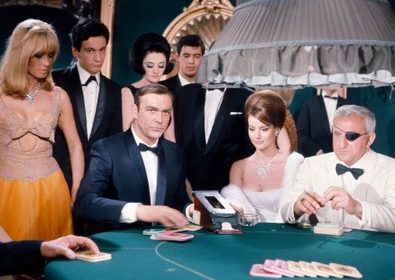

When Ian Fleming sat down to write Casino Royale in 1953 he wasn’t staging a flashy casino caper for a modern audience.
He was inventing a man: continental, controlled, and quietly lethal. To introduce that man, Fleming chose baccarat (specifically the European form chemin de fer). The choice was deliberate.
The game does what few other games can in a single scene: it signals class, compresses fate, and turns a card table into a courtroom where character is judged.
Play Baccarat in the best Online Casinos
Find a complete casino overview here. Click on the casino of your choice to register.




A single table, a whole biography
In one gambling session Fleming can show us Bond’s upbringing, his training, and his temperament. Baccarat in the mid‑20th century was not a tourist attraction.
It was a private salon game — the kind of pastime that whispers of continental salons, discreet wealth, and old social codes. A man who knows baccarat isn’t ostentatious; he belongs.
That costume of class is vital. Bond never needs to shout what he is; he needs to be the kind of man other men assume can hold the line. The baccarat table establishes that instantly.
“Baccarat is ritual, not mathematics.”
Baccarat is a game of nerve, not arithmetic
Unlike poker or blackjack, baccarat offers very few decisions. The rules are short, choices minimal, and outcomes largely left to the turn of the cards.
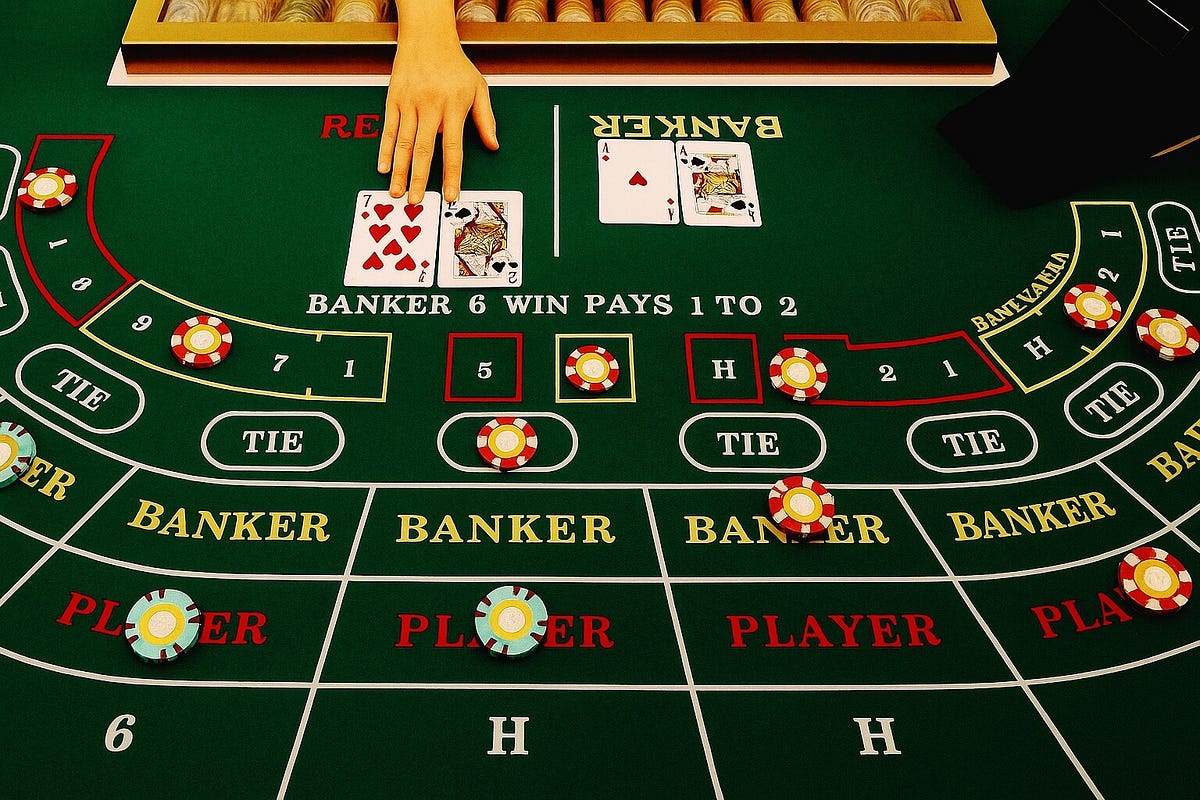
That absence of control is the point. Bond is not a numbers man; he is a psychologist and a test of composure.
Baccarat hands a player the possibility of enormous gain—and of ruin—without letting skill dominate the spectacle.
That makes every bet an emotional probe: not how clever you are, but how steady.
For a spy, this is perfect. Espionage is often about reacting rather than calculating, about endurance rather than an elegant outplay.
In a baccarat game the opponent’s reaction is the only lever left.
Fleming’s fingerprints on the table
Fleming wrote what he knew. He moved in circles where chemin de fer was played and borrowed details from the real casino culture of Europe. That authenticity matters.
The baccarat scenes in the novel have a texture – slow reveals, the mechanical ritual of the cards, the physical signs of fear and composure – that feel lived in.
Fleming’s Le Chiffre is not a caricature; he is a man whose panic is almost audible in the way he handles the stakes.
Casino Royale’s game is the mission
Read the baccarat episode as a spy mission and the level of craft becomes clear. Officially Bond’s objective is to bankrupt Le Chiffre and recover stolen funds. Practically, the table is a trap.
Every wager forces Le Chiffre to show how desperate he is, to reveal his limits and whom he answers to. The money? It’s bait.
The public setting of a casino is a brilliant work environment for spies: neutral ground where masks are expected and watching is banal.
The casino lets Bond observe without suspicion, apply pressure without firing a shot, and make other people’s panic into evidence.
The game’s ritual pace mirrors intelligence work—slow reveals, a few dramatic moments, and consequences that ripple far beyond the felt.
Le Chiffre: accountant, antagonist, doomed
Le Chiffre appears in Fleming’s 1953 novel as the central antagonist: a financial fixer who gambles with other people’s fortunes and, when he loses, is expendable.
His name literally evokes the accountant or the number — he is the man who moves money, not muscle. In the book he plays baccarat and is physically and psychologically vulnerable: not theatrical villainy but pathetic terror.
That fragility is what makes the game consequential. When a man who has everything to lose starts to sweat, you know the mission is real.
James Bond switches from Baccarat to Poker
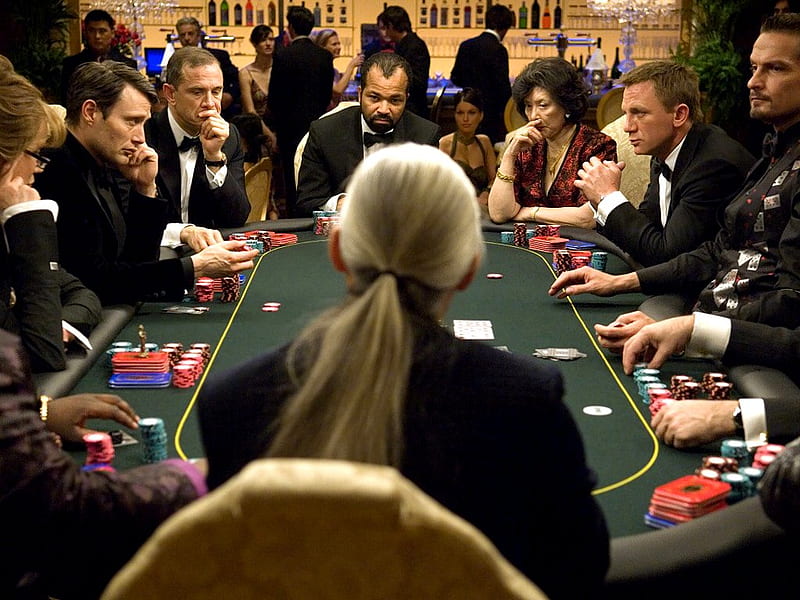
Fast‑forward to the 2006 film adaptation starring Daniel Craig: the table is no longer baccarat but high‑stakes Texas Hold’em poker. Why the switch?
Two reasons. One, modern audiences – after the poker boom of the early 2000s – instantly read poker.
Two, poker’s visible skill, bluffs, and dramatic reversals make for clearer cinematic beats.
Poker lets the camera watch faces tighten, chips slide, and a single revealed hand become a turning point.
But the swap of games did not swap the story. The table remains a battlefield: bankrupt the antagonist, expose his backers, and watch what panic does to power.
Baccarat vs. poker: two ways of saying the same thing
Baccarat and poker tell slightly different stories about Bond. Baccarat emphasizes fate, stoicism, and the ritual of elite restraint.
Poker emphasizes reading, bluffing, and modern psychological warfare.
Fleming’s Bond is a man tested by endurance and luck. The cinematic Bond is a man who reads tells and forces mistakes.
Both versions use gambling to distill espionage to its essentials: risk, observation, and consequence.
The elegance of a choice
Pick any late‑night scene in Casino Royale and you’ll see why baccarat was Fleming’s choice: it fits the era, the social circle, and the emotional economy of the novel.
The play itself becomes a character test for Bond and, for Le Chiffre, a trap that reveals character through collapse.
When Fleming wrote a man who could sit through humiliation and still finish the job, baccarat was the perfect instrument. It’s quiet, cruel, and final — like Bond himself.
More Stories Selected for You
You must be logged in to post a comment.