Online Slots – What is “Bonus Buy” and Should You Use It

If you’ve played online slots, you’ve seen the button: “Buy Bonus”, “Buy Feature”, “Enhanced Spins”. You’ve probably wondered whether it’s a shortcut, a sucker bet, or a smart move. Here’s a clear, source-cited explainer so you can decide for yourself.
Where the idea came from
The modern “buy the bonus” mechanic — that on-screen option that lets you pay a multiple of your stake to jump straight into a game’s free-spins / bonus round — was popularised in the online era by Big Time Gaming with its Feature Drop system in White Rabbit Megaways (released in 2017). That title made the “buy-in” mechanic visible to millions of players and other studios soon adopted similar options.
Play the most popular branded online slots in the best Online Casinos
Find a complete casino overview here. Click on the casino of your choice to register.

Older slots had second-screen bonus rounds long before online play, but the specific, on-demand pay-to-enter option is an online-era design that spread rapidly after Big Time Gaming’s hit.
The idea in plain language
When you press a Buy Bonus button you pay a one-time price (expressed as a multiple of your current bet) and the game immediately gives you the bonus round that would otherwise require landing scatter symbols or fulfilling other rare conditions. It is a “fast pass” straight to the high-variance feature — useful if you want fewer base spins and more time in the volatile, high-win potential part of the game.
Typical prices and how they vary (real examples)

There’s no single rule — studios pick different multipliers and mechanics — but concrete examples show the range:
- Pragmatic Play — Sweet Bonanza: Buy the free spins for 100× your total bet (common in many Pragmatic Sweet Bonanza releases).
- Big Time Gaming — White Rabbit (Feature Drop): the Feature Drop option is a buy-in that commonly appears at ~100× stake (and can reduce during play via tokens). White Rabbit was one of the first widely seen implementations.
- Hacksaw Gaming — Chaos Crew: Hacksaw offers multiple buy options, from 3× up to 200× (and specific buys with different guarantees). For example Donny Dough lists buys at 3×, 50×, 90×, 200× depending on the feature.
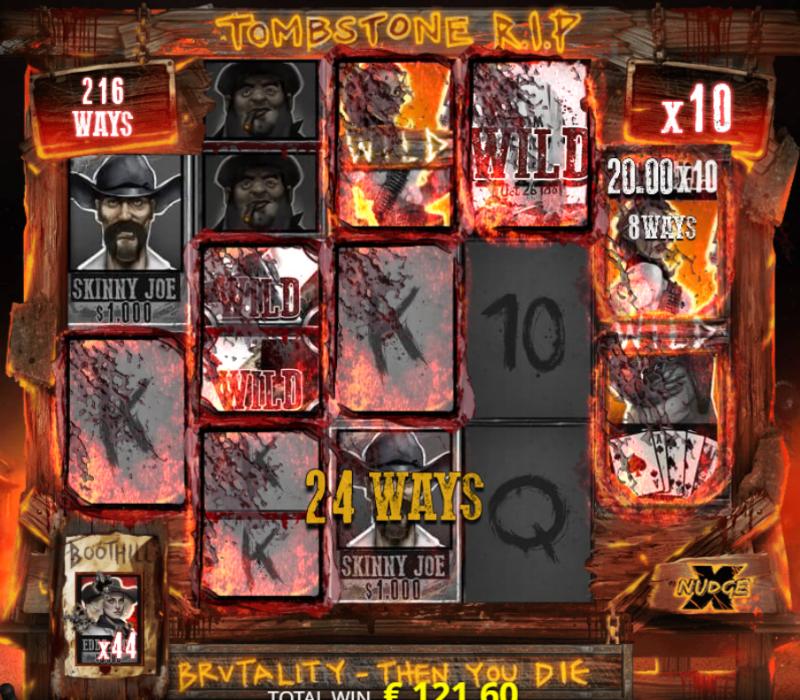
- NoLimit City — Tombstone R.I.P.: NoLimit lets you buy different bonus tiers; example pricing ranges from ≈70× up to 3,000× the base bet depending on which bonus you pick. Some buy options include published RTPs.
- Yggdrasil & BGaming: both studios routinely include Buy/Bonus Buy options — Yggdrasil titles (e.g., Book of Evil, Sidewinder DoubleMax) and BGaming titles (e.g., Aztec Magic Bonanza, Gemhalla) show the same pattern: a fixed multiple of your bet to enter free spins.
So: buy prices commonly sit between a few times your bet (3×–10×) for small “chance boost” buys up to 100× or more for full free-spins purchases — and occasionally extremely high for premium/guaranteed jackpots (hundreds or thousands ×).
How to think about “how much more do you need to invest” and “how much better your chance gets”
Two ways casinos present buy mechanics:
- Buy the full bonus (one-off price): e.g., 100× your bet to get the standard free-spins feature immediately. That’s a direct additional investment of 100 bets. (If you normally bet €1 per spin, that’s €100.)
- Boost / probability buys: cheaper buys that increase the likelihood of a bonus on each spin (e.g., Hacksaw’s “BonusHunt FeatureSpins: each spin is 5× more likely”, cost 3× bet). These buys change the per-spin trigger probability rather than skip to the feature.
The basic math — when buying saves you money (step-by-step)
I’ll show the simplest, robust comparison you can use (it assumes you only care about entering the bonus round; it ignores base-game wins/losses and retriggers — those affect the full EV but don’t change the core intuition).
Notation:
- let p = probability a single spin triggers the bonus naturally (e.g., p = 1/450 means one bonus per 450 spins on average),
- let k = buy price measured in bets (e.g., k = 100 for a 100× buy),
- let A = average payout (in bets) you receive from the bonus round when it happens.
If you do not buy, the expected number of spins until a bonus ≈ 1 / p (geometric distribution mean). So expected bet-cost to reach the bonus ≈ 1 / p bets. When it hits you then (on average) collect A bets from the bonus.
If you buy, your cost is k bets and you immediately receive the expected bonus payout A.
So the buy is cheaper than spinning if:
k < 1 / p
— because buying costs fewer bets on average than the expected number you’d otherwise spend spinning until a trigger.
Numeric example (step-by-step digits):
- Suppose p = 1/450 (one trigger per 450 spins on average). Then 1 / p = 450 (that’s four hundred fifty bets expected until a bonus).
- If the buy price is k = 100, compare 100 vs 450. Because 100 < 450, buying costs fewer bets than the expected cost of spinning until you hit the bonus. So buying is cheaper in terms of bets spent to reach a bonus. You saved 450 − 100 = 350 bets in expectation.
This is the simple cost comparison — but profitability requires considering expected returns (RTP) and base-game small wins, not only the cost to reach a bonus. If the bonus’s average payout A is the same whether you bought it or triggered it naturally, then the buy that satisfies k < 1/p will give you a higher expected net per bonus cycle than spinning.

A worked example using a real game (Tombstone R.I.P., NoLimit City)
NoLimit City publish multiple buy tiers for Tombstone R.I.P. — for two example buys sources show:
- Hang ’em High buy ≈ 70× the base bet (advertised RTP around 96.47% for that option in some breakdowns).
- Boothill premium buy ≈ 3,000× the base bet (advertised RTP in some breakdowns ≈ 97.03% for that option).
Two observations:
- If the base (non-enhanced) game’s average chance to hit the bonus is very low (say 1/1,000), then a 70× buy looks cheap relative to expected 1,000 bets of spinning — strictly by the cost-to-reach-bonus criterion.
- The published RTP for buy options is often higher or lower than the base RTP depending on the game and which buy you choose. For Tombstone R.I.P. the high-price buy shows an advertised RTP above the base game, meaning — on average — that particular buy would be less losing per bet than playing the base spins, according to the published math. Remember: RTP is average theoretical return over huge samples and depends on which buy option is used.
Why arithmetic alone doesn’t give the whole answer
- Base-game wins matter. When you spin instead of buying you may collect small wins while waiting for the bonus. That reduces the expected net cost of reaching a bonus compared with the simple 1/p bets if those spins pay back. The simple 1/p test ignores the base-game RTP and only counts the number of bets.
- Bonus variance is huge. Even if buying reduces expected cost to enter the bonus, the bonus outcome (A) is highly variable — you can lose everything many times before hitting a top payout.
- Buy options and their RTPs vary by game and region. Sometimes providers publish buy-option RTPs or operator calculators; when those advertised RTPs exceed the base game RTP buying can be mathematically less unfavorable on average — but it never guarantees profit in the short term.
So — is buying ever “profitable”?
Short answer: sometimes, on average, yes — but not guaranteed short-term.
- If a buy option’s advertised RTP (or your own EV calculation using provider numbers) is higher than the base game RTP, then on average the buy is less losing than spinning the base game — across millions of spins that would show up as a higher yield. NoLimit’s published buy RTPs for certain Tombstone buy tiers are an example where the buy option produces a higher theoretical RTP than the base game.
- If you are trying to minimise the expected number of bets to reach a bonus, use the inequality k < 1 / p. If that holds (and you ignore base-game wins), buying is cheaper in terms of bets. Example: if average base chance is 1/450 and the buy is 100×, buying is cheaper (100 < 450).
But remember: “profitable” ≠ “guaranteed big win.” Even buy options with solid theoretical EV still produce many losing sessions because the bonus is high-variance.
Why players click Buy Bonus anyway
You probably recognize these motives:
- Time and fun: you get straight into the entertaining, feature-packed part of the game where the biggest action and streamer-friendly wins happen. Many players value that experience per minute more than the long Base Game grind.
- Control and psychology: buying removes the wait and “grindy” frustration of long losing runs. It feels like taking control of variance. Streamers and high-rollers often use buys to create content/large swings.
- Occasional positive EV: certain buys (or particular premium buy tiers) are sometimes designed mathematically so the expected return is comparable to — or better than — base play; seasoned players who track RTP and hit rates will buy when the numbers are favorable. NoLimit City themselves argue (internally/public posts) that buys allow designers to create very large, complex bonuses that would be impractical without the buy mechanic.
Play the most popular branded online slots in the best Online Casinos
Find a complete casino overview here. Click on the casino of your choice to register.
Quick checklist you can use before you buy
- Find the buy price (k) — in × your current bet. (Game UI or provider page.)
- Estimate how often the bonus hits naturally (p) — use slot trackers or provider stats if available. If not available, treat p as uncertain and be conservative.
- Compare: if k < 1/p then the buy costs fewer bets than the expected spin cost to reach a bonus (simple but useful test).
- Check published buy-option RTP (some providers publish effective RTPs for buy choices). If the buy RTP > base RTP, buying improves long-run expectation.
- Decide on bankroll & session goals — buys magnify variance; only use them with money you’re prepared to lose.
Five concrete slot examples
You asked for one successful slot with a buy feature from each big provider. Here are five examples and proof they include a buy:
- Pragmatic Play — Sweet Bonanza — popular sugar-themed slot; the game (and some of its variants) offers a Buy Feature for free spins (commonly 100× stake).
- Hacksaw Gaming — Chaos Crew / Donny Dough — Hacksaw titles include tiered buy options and “BonusHunt” buys (examples: costs like 3×, 50×, 90×, 200× depending on the feature).
- Yggdrasil — Book of Evil (and many others) — Yggdrasil explicitly lists Buy Feature / Bonus Buy on several titles (e.g., Book of Evil, Sidewinder DoubleMax, 4K Ultra Gold).
- NoLimit City — Tombstone R.I.P. (Tombstone series) — large, streamer-favourite game with multiple buy tiers (≈70× up to 3,000×) and published buy mechanics/RTPs for some tiers.
- BGaming — Aztec Magic Bonanza — BGaming titles frequently include Buy Bonus options (Aztec Magic Bonanza, Dice Bonanza, Gemhalla etc.), with the Buy Bonus button visible in the UI.
Final verdict — is it worth using Bonus Buy?
- If you value time and the feature’s entertainment, and accept high variance, a Buy can be worth it for fun or to experience the slot’s excitement immediately.
- If you want to maximise long-term expected value, compare the buy price (k) vs expected spins to trigger (1/p) and look for published buy-RTPs; some buy options are mathematically less bad than base play and may be preferable on average — but that’s long-run math, not a promise of short-term wins.
- If you chase guaranteed profit, don’t: even a buy option with higher theoretical RTP still has variance and many losing sessions. Treat buys like a tool, not a guaranteed edge.
More interesting Stories
You must be logged in to post a comment.