How to Win Prediction Markets #3: Be the Market
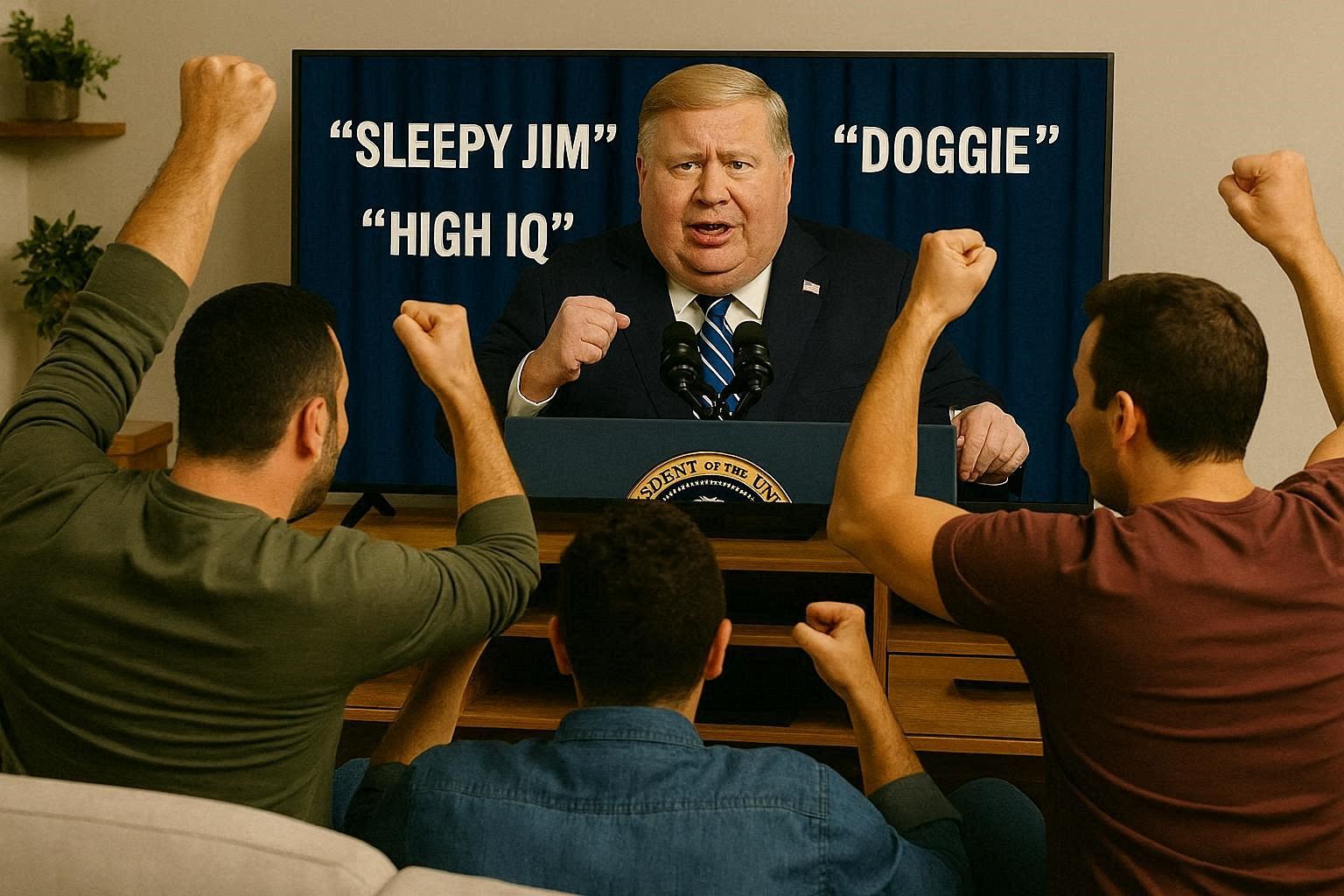

Still not winning at prediction markets? Only one thing left to do: become the event itself. Be the market. Prediction markets are often sold as a clean way to price reality. In theory, they are a collective truth machine.
Top Online Casinos without Manipulation
Find a full review list here. Click on the images below to choose your favorite casino!



A Bitter Satire on “Winning” by Manufacturing the Win ner
In practice, the whole system starts to look a lot less like a microscope and a lot more like a carnival mirror.
Reuters and AP have both reported how prediction markets now cover everything from elections and wars to highly specific real-world events, which is exactly what makes them so easy to satirize.
The more niche the event, the more tempting it becomes to imagine someone gaming the setup.
The easiest way to win a prediction market is to create the thing people are betting on
That is the joke at the center of this article.
Not that prediction markets are fake. Not that every market is rigged. Not that every bettor is some shadowy supervillain in a hoodie staring at six monitors.
The point is simpler and uglier: if you can shape the event, you can shape the market.
And once you notice that, you start seeing the absurdity everywhere.
Exhibit A: the cruise-ship hantavirus story
In May 2026, Reuters and AP reported a hantavirus outbreak aboard the MV Hondius, a cruise ship that had become stranded with passengers quarantined, evacuated, or hospitalized.
Reuters said three passengers had died and that passengers were being flown or transported for treatment, while AP said health officials were managing a rare rodent-borne illness with a low general-public risk but serious consequences for those exposed.
Now, in a normal world, that is a public-health story.
In prediction-market land, the satire writes itself.
A cruise ship.
A rare outbreak.
A dramatic headline.
A confined population.
A perfectly legible event with a beginning, middle, and end.
It is almost too good. Almost engineered by the universe to be turned into a contract.
So the question becomes:
Which of our three categories is this?
Is it “Know the market” because someone somehow knew the outbreak would become a marketable panic?
Is it “Destroy the market” because a frightening story can distort attention, reporting, and resolution?
Or is it the final boss of the trilogy, “Be the Market,” where reality itself is so conveniently packaged that all you need to do is wait for people to trade it?
That, of course, is the joke. There is no manufactured Hanta outbreak on a cruise ship. We are merely pointing out that once a market exists, the temptation to imagine it being fed by curated chaos becomes very hard to resist.
The Mock Conspiracy: What if the Event is the Product?
Let us be appropriately ridiculous for a moment.
Imagine the ideal “winning bet” environment:
A condition appears.
The media notices.
The market opens.
The event becomes legible enough to trade.
A few traders get in early.
Everyone else arrives late and calls it “price discovery.”
That is the satire of modern prediction markets in one paragraph.
Because the market rewards whoever gets there first, the whole system starts to resemble a machine that incentivizes not just forecasting, but event design. Not in every case. Not as a universal accusation. Just as a perfectly plausible incentive structure that would make any cynical observer squint.
And that is the joke this article is built on: the market is so flexible, so eager, so contract-hungry, that it invites one very uncomfortable thought.
What if the easiest bet is the one reality was arranged to accommodate?
The Logic of the “Designed Winning Bet”
A prediction market loves clean binaries. Yes or no. Up or down. Will it happen or not. The cleaner the event, the easier the contract.
The easier the contract, the easier it is to imagine someone trying to manufacture the cleanest possible setup.
That is why the most grotesque satire in prediction markets is also the simplest:
If the market pays on outcomes, and outcomes can be nudged, staged, amplified, framed, or timed, then the line between “forecasting” and “curating the forecast” gets thinner and thinner.
This is not a claim that every event is fabricated. It is a warning that the structure itself makes fabrication thinkable.
And once something is thinkable, it becomes tradable.
The Real Lesson: The Market does not just Measure Reality
This is where prediction markets stop feeling like neutral instruments and start feeling like commentary on modern life itself.
They do not merely measure what happens. They reward the people who can:
- anticipate what will be reported,
- influence how it will be reported,
- or shape the event enough to make it tradable in the first place.
That is why the title “Be the Market” is the bleakest and funniest of the three. It suggests not prediction but absorption. Not analysis but conversion. Reality becomes product. Product becomes payout.
That is the satire. And also the warning.
We are not saying prediction markets are fake. We are asking questions
To be clear, we are not alleging that prediction markets are fake.
We are saying something more uncomfortable: it is at least possible to imagine how they could be bent, gamed, pressured, or theatrically fed by the very reality they are supposed to observe.
That possibility is enough to make the whole spectacle feel less like rational forecasting and more like a glossy ritual for converting uncertainty into a wager.
And if that sounds like another small monument to Western decadence, then fine: perhaps it is.
Another polished machine for monetizing panic, gossip, and catastrophe—one more elegant signpost on the road toward the end of civilization, or at least toward the kind of civilization that thinks every crisis should have a ticker and a price.
But of course, it could also be just another harmless, fun gambling idea coming from the US, a country that is now permanently attacking its allies, its social networks, and eventually its own population.
Which one of these is more likely, do you think?
More Selected News
- How to win at Prediction Markets #2: Destroy the Market
- How to Win at Prediction Markets #1: Know the Market
- Bet Bizarre (10) – Arizona Man fakes Cartel kidnapping, loses his bet
- Caleta Gaming “Cluster Cup” Football Slot
- Reactoonz 100 named Slot of the Year at SBC Gaming Awards
- TimTheTatman wins $1.4 million on Gator Hunters
- Las Vegas Player hits Two Jackpots in one Session
- “Book of Dead Collect” Tops Success of the “Dead” Series
- Top 5 Most Popular Branded Slots
You must be logged in to post a comment.