How to Win at Prediction Markets #2 – Destroy the Market


Couldn’t win at prediction markets even though you knew the market? Well, go ballistic, then.
Prediction markets are usually sold as clean machines for discovering truth. In theory, money flows toward the correct answer and noisy opinion gets filtered out.
In practice, the market only works if the people reporting reality, resolving outcomes, and participating in trades are all playing by roughly the same rules.
Recent reporting shows how quickly that can break down.
The ugly truth is simple: once money is tied to a live event, the event itself becomes a target.
Editor’s note: We’re not saying prediction markets are rigged. We’re just saying.
Top Online Casinos that won’t destroy you




When bettors go after the referee
One of the clearest examples came in March 2026, when Israeli military correspondent Emanuel Fabian said users on Polymarket contacted him after he reported on an Iranian missile strike near Beit Shemesh.
According to Fabian’s account, some bettors wanted him to change the story so their market position would resolve differently, and the pressure escalated into threats. He said he refused, and reported the harassment to police.
The Times of Israel published Fabian’s firsthand account, while The Guardian, Business Insider, and other outlets reported the same incident and the reaction from Polymarket.
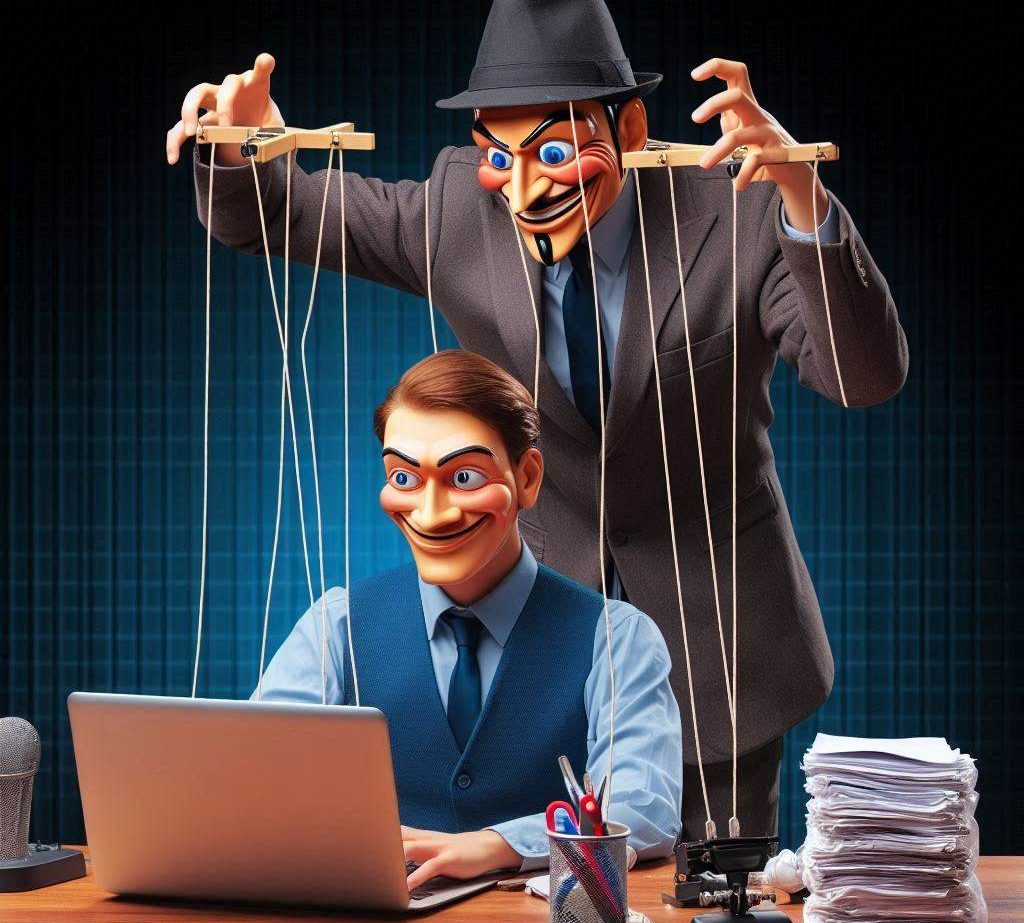
That case matters because it shows the market is not just vulnerable to bad information. It can also create incentives to attack the information pipeline itself.
If a journalist’s report can determine whether a contract pays out, then the journalist is no longer just a reporter. In the eyes of some bettors, he becomes part of the trade.
Polymarket condemned the harassment and said it removed accounts linked to the threats, which is an important signal.
Even the platform recognized that market credibility depends on journalists being able to report without coercion.
Why this kind of pressure works
Prediction markets depend on outside reality, but they do not control that reality. They depend on public reporting, official statements, and the wording of resolution rules.
That creates three pressure points: the story can be pushed, the outcome can be influenced, and the resolution can be argued over after the fact.
Reuters has warned that insider-trading fears hurt prediction markets because people stop trusting the price if they believe better-informed actors can steamroll everyone else.
That is why manipulation in these markets is broader than classic insider trading. It is not only about secret information. It is also about shaping what gets said, when it gets said, and how the event is described.
Once money depends on the wording of a report, users have an incentive to pressure the person writing the report.
The market can be manipulated at the edges
This is not hypothetical. Reuters reported scrutiny over big bets on prediction markets tied to geopolitical events, including wagers placed before Trump-related policy moves and bets around the Khamenei case.
In one Reuters report, analytics firm Bubblemaps identified six accounts that together made about $1.2 million from Polymarket bets funded in the hours immediately before the U.S.-Israeli attacks that killed Khamenei.
Reuters also reported that such cases have raised renewed concerns about insider trading and ethics.
Reuters likewise reported that prediction markets are now so large that Kalshi’s weekly trading volume tops $1 billion, while Reuters video reporting said more than a billion dollars a week is being staked across Polymarket and Kalshi.
At that scale, even small manipulations become worth chasing, because a tiny informational edge can turn into a meaningful payout.
The danger is not that every strange trade proves a conspiracy. The danger is that the structure rewards anyone who can get close to the event, the source, or the resolution rule.
When that happens, the market stops being a neutral forecast and starts looking like an adversarial information contest.
Reuters has described exactly that tension in its coverage of insider-trading fears around prediction markets.
When participants become the outcome
Another sign of instability is what Kalshi did with political candidates who bet on their own races. AP reported that Kalshi fined and suspended three congressional candidates for wagering on their own election outcomes, treating it as a market-integrity issue even though the bets were relatively small.

One candidate called the punishment a form of protest; another publicly apologized and said the episode showed why regulation matters.
That sounds minor, but it reveals the core flaw. If the person who can influence the result is also trading on the result, the market is no longer just forecasting politics.
It is being folded into politics. And once that happens, the line between prediction and participation starts to disappear.
The platforms know this is a problem
The industry is not pretending the issue does not exist. Reuters reported that both Polymarket and Kalshi updated their rules in March to ban wagers made using confidential or illicit information after a wave of scrutiny around war-related and political markets.
That change alone tells you how serious the problem has become: the platforms are trying to harden the rules because the incentive to abuse them is obvious.
Reuters also reported a first-of-its-kind U.S. criminal case involving prediction-market insider trading, with a soldier accused of using classified information to bet on Maduro’s removal.
That case matters less as a one-off than as a precedent. It shows that the market can be exploited in ways that look very familiar to securities-law regulators, even if the product itself sits in a legal gray zone.
Information Manipulation, Pressure, and the War Over Truth
The problem with prediction markets is not just that someone might know more than you. It is that the incentive structure rewards people who can distort what others know.
This can mean threatening a journalist, pressuring a reporter, exploiting ambiguous wording, or betting on events you helped shape.
The market can still produce useful signals, but only if the underlying information environment stays clean.
Recent reporting suggests that assumption is getting harder to defend.
That is the real meaning of “destroy the market.” You do not have to hack the exchange to break confidence in it. You only have to make people wonder whether the truth itself has become tradeable.
They say the truth is the first casualty of war for a reason.
In Part 3, we will look at the opposite tactic: not attacking the market from the outside, but designing it so the easiest bet is the one you already know how to win.
More Selected News
- How to Win at Prediction Markets #1: Know the Market
- Bet Bizarre (10) – Arizona Man fakes Cartel kidnapping, loses his bet
- Caleta Gaming “Cluster Cup” Football Slot
- Reactoonz 100 named Slot of the Year at SBC Gaming Awards
- TimTheTatman wins $1.4 million on Gator Hunters
- Las Vegas Player hits Two Jackpots in one Session
- “Book of Dead Collect” Tops Success of the “Dead” Series
- Top 5 Most Popular Branded Slots
You must be logged in to post a comment.